What If Going Back Could Move Us Forward

For most of my life, Italy was part of my identity without actually being part of my life.
It was there in the last name. In family stories. In traditions that somehow survived generations and an ocean. Like so many Italian Americans, I knew where my family came from.
But knowing the name of a place and knowing a place are two very different things.
Over the past several months, I’ve been trying to close that distance.
What started with family research became something much bigger.
Names led to birth records. Records led to addresses. Addresses led to streets, churches and homes. And eventually, people who had existed only as names in a family tree began to feel real again.
Then something unexpected happened.
The past started leading toward the future.
Going Beyond the Family Tree
There is something fascinating about discovering the name of an ancestor who lived 150 years ago.
But eventually I wanted more than names and dates.
I wanted to know where they walked.
Where they went to church.
What they saw when they opened their front door in the morning.
Why they left.
And perhaps most importantly, what remains today.
In a few days, I’ll travel to Southern Italy and begin answering some of those questions for myself.
I’ll walk streets connected to my family more than a century ago. I’ll meet people I’ve only recently come to know. I’ll visit the churches, neighborhoods and places that existed long before anyone in my family boarded a ship for America.
I’m excited. I’m also a little nervous.
My Italian is nowhere near where I wish it were. I don’t know exactly what I’m going to find. And there’s something strange about traveling thousands of miles toward a place you’ve never lived and wondering whether some part of it will nevertheless feel familiar.
The Question I Didn’t Expect
The deeper I went into my own history, the more another question kept appearing.
What happens after we find our roots?
For millions of descendants of Italian immigrants, genealogy has made it possible to discover where our families came from.
But maybe finding the village is only the beginning. What if we went back?
Not simply to take a photograph beside a town sign and leave the next morning.
What if we stayed awhile? What if we ate in the local restaurants, shopped in the local stores and got to know the people who live there now?
What if some of us restored the abandoned homes our ancestors once knew?
What if our children spent summers there? What if descendants scattered across America, Canada, Australia and elsewhere began reconnecting with these places?
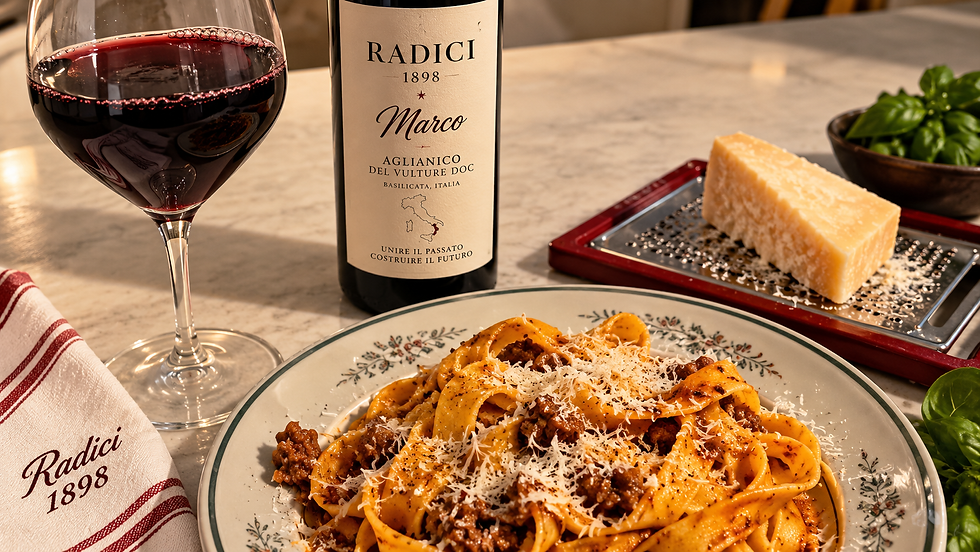
And what if that connection could help write a new chapter for some of the small Italian towns our families left behind? Those questions have become a large part of what Radici 1898 means to me.
Returning Is Not Going Backward
There’s a tendency to think about heritage as something behind us. I’m beginning to see it differently.
Our roots tell us where the story began. They don’t tell us where it has to end.
The villages our ancestors left are not museums. They are living communities filled with people, traditions, businesses, homes and possibilities.Some are struggling.
Some have watched generations leave.
But they are still there. And scattered around the world are millions of descendants whose family stories began in those same streets.
There is something powerful in bringing those two worlds together again.
Now It’s Time to Go
For months, I’ve looked at Italy through documents, photographs, maps and computer screens.
Soon I’ll see it with my own eyes.
Maybe some of the ideas I’ve imagined will look completely different once I’m there.
I hope they do.
Radici isn’t about creating a romantic version of Italy from thousands of miles away. It’s about understanding these places as they really are — their history, their beauty, their challenges and their possibilities.
So this trip isn’t the conclusion of the research.
It’s the beginning of the next part.
I’ll be sharing the people I meet, the places I discover, the food and traditions, the homes, the stories — and probably a few things I never expected to find.
Because somewhere along the way, this stopped being only about discovering where my family came from. It became a question that I think many of us with roots somewhere else eventually ask:
What if going back could become part of moving forward?
I’m about to find out.
— Marc
Founder, Radici 1898

Comments